





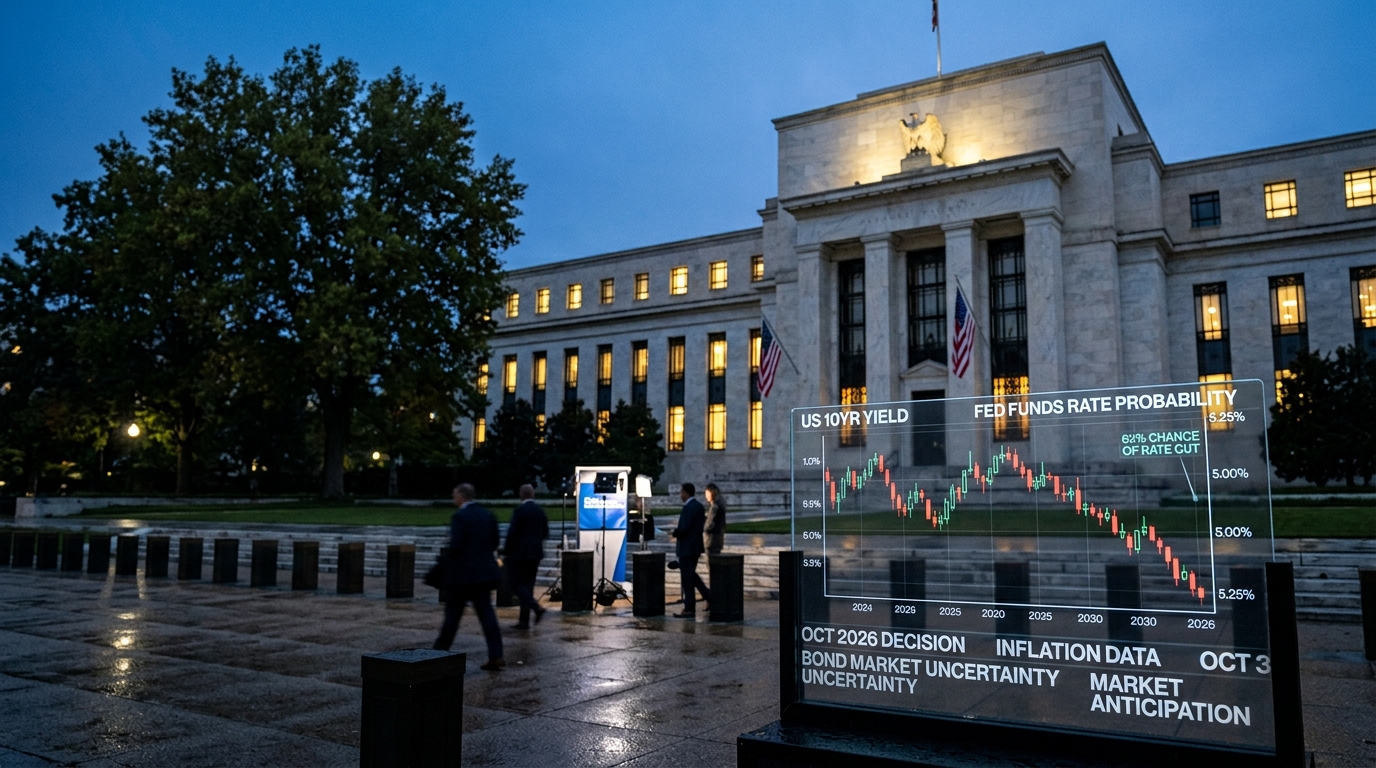
Will the Fed Raise Interest Rates in October 2026? What We Know
The next Federal Reserve interest rate decision is approaching, but the outlook for an October rate hike has become less certain after weaker-than-expected U.S. jobs data.
The Federal Open Market Committee (FOMC) is scheduled to meet on October 27–28, 2026, with the policy decision and press conference expected on October 28.
The big question for markets, businesses and borrowers is whether the Fed will raise interest rates again or pause to assess the latest economic data.
What Is the Fed Expected to Do in October?
At the moment, a pause in October looks more likely than another immediate rate increase, although the decision is not guaranteed.
Reuters reported on October 2 that Federal Reserve policymakers were already leaning against another rate increase in October, and the latest employment report gave them another reason to wait for more information.
However, the Fed has not ruled out another increase later in the year.
The central bank raised its target interest-rate range to 3.75%–4.00% in September and has indicated that another increase could still be needed if inflation remains too high.
Why the September Jobs Report Matters
One of the biggest developments ahead of the October meeting was the latest U.S. employment report.
The U.S. economy added only 29,000 jobs in September, well below economists’ expectation of about 90,000. The unemployment rate also increased from 4.1% to 4.2%.
Wage growth also slowed, with average hourly earnings increasing by 0.1% during the month and the annual rate slowing to 3.0%.
The numbers suggest that the labor market is losing some momentum.
That creates a difficult situation for the Federal Reserve.
If the Fed raises rates too aggressively while hiring is weakening, it could put additional pressure on businesses and consumers.
But if inflation remains above the Fed’s target, policymakers may still believe higher interest rates are necessary.
Why the Fed May Wait
Several Federal Reserve officials have recently signaled that they want more time to evaluate the economy before making another move.
New York Fed President John Williams said there was no need for urgency over another rate increase, while Cleveland Fed President Beth Hammack said there was still time to assess additional economic information before the October meeting.
That gives policymakers several more weeks to examine inflation, employment and other economic indicators.
Inflation data arriving before the October meeting could therefore play a major role in the final decision. Reuters reported that the consumer price index is one of the key pieces of information policymakers will be watching.
Could the Fed Still Raise Rates in October?
Yes.
A rate hike has not been completely taken off the table.
The Federal Reserve’s September decision showed that policymakers remain concerned about inflation, and some economists previously expected another increase as early as October.
The Fed therefore has two competing concerns:
- Inflation remains too high, which could support higher rates.
- The labor market is weakening, which could support a pause.
The data released between now and October 28 could determine which concern becomes more important.
What Would an October Rate Hike Mean?
If the Fed raises rates again, borrowing costs could remain under pressure.
Higher U.S. interest rates can affect:
- Credit card borrowing
- Personal loans
- Mortgages
- Business financing
- Bond yields
- Savings rates
- Currency markets
- Stock markets
The effect is not always immediate or identical across all financial products. Banks and lenders set their own rates based on several factors.
For consumers, however, another Fed increase would generally mean that borrowing is likely to remain relatively expensive.
What If the Fed Keeps Rates Unchanged?
A pause would give policymakers more time to see whether inflation is falling without putting additional pressure on the labor market.
It could also give businesses and consumers some relief from expectations of continually rising borrowing costs.
But a pause would not necessarily mean that rate cuts are coming next.
The Fed could hold rates steady in October and then decide later in the year that another increase is necessary.
Reuters reported that markets were increasingly expecting the Fed to skip an October hike, while some investors still see a possible increase later in the year, particularly in December.
When Is the Next Fed Interest Rate Decision?
The Federal Reserve’s October FOMC meeting is scheduled for October 27–28, 2026.
The Fed’s official calendar lists the policy meeting on those dates, with the press conference scheduled for October 28.
The next scheduled FOMC meeting after October is December 8–9, 2026.
That makes the October decision particularly important for investors trying to understand the Fed’s direction heading into the final months of the year.
What Should Borrowers and Savers Watch?
Anyone with a loan, mortgage, savings account or investment portfolio should watch the Fed decision alongside inflation and employment data.
A single rate decision does not determine every consumer interest rate.
Instead, the Fed’s policy rate influences broader financial conditions, while individual banks and lenders determine the rates they offer customers.
For borrowers, the most important question may therefore be whether interest rates are likely to remain high for longer.
For savers, higher rates can provide better returns on some interest-bearing accounts, although the actual rate depends on the financial institution and account.
The Bottom Line
The October 2026 Federal Reserve decision is still uncertain, but the latest evidence points toward a pause being more likely than an immediate rate hike.
The September jobs report showed weaker hiring and a slightly higher unemployment rate, giving policymakers another reason to wait for additional information.
However, inflation remains an important concern, meaning another rate increase later in the year cannot be ruled out.
The next major test comes on October 27–28, when the Federal Reserve meets to decide its next monetary-policy move.
Frequently Asked Questions
When is the next Fed interest rate decision?
The next Federal Open Market Committee meeting is scheduled for October 27–28, 2026, with the policy announcement and press conference on October 28.
Will the Fed raise interest rates in October 2026?
A rate increase is possible, but recent reporting indicates that policymakers are leaning toward waiting for more economic data before making another move.
What is the current Fed interest rate?
Following the September 2026 decision, the Federal Reserve’s target range was 3.75%–4.00%.
Why does the Fed raise interest rates?
The Federal Reserve can raise interest rates to tighten financial conditions and help bring inflation under control.
When is the next Fed meeting after October?
The next scheduled FOMC meeting is December 8–9, 2026.
About the Author


